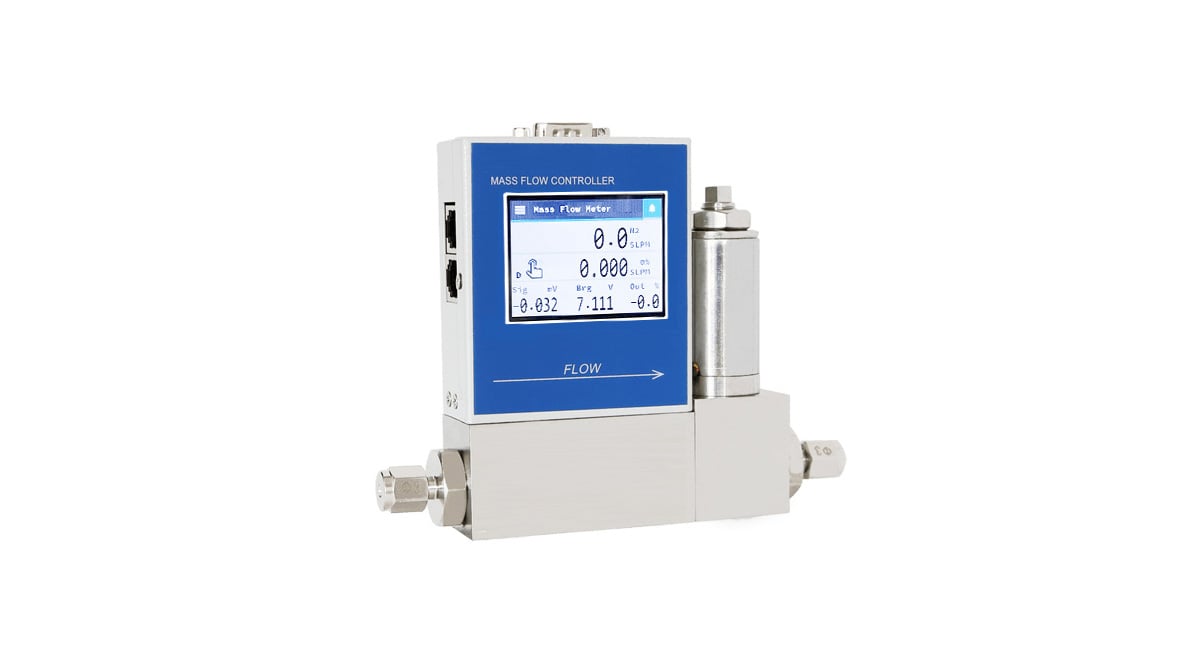
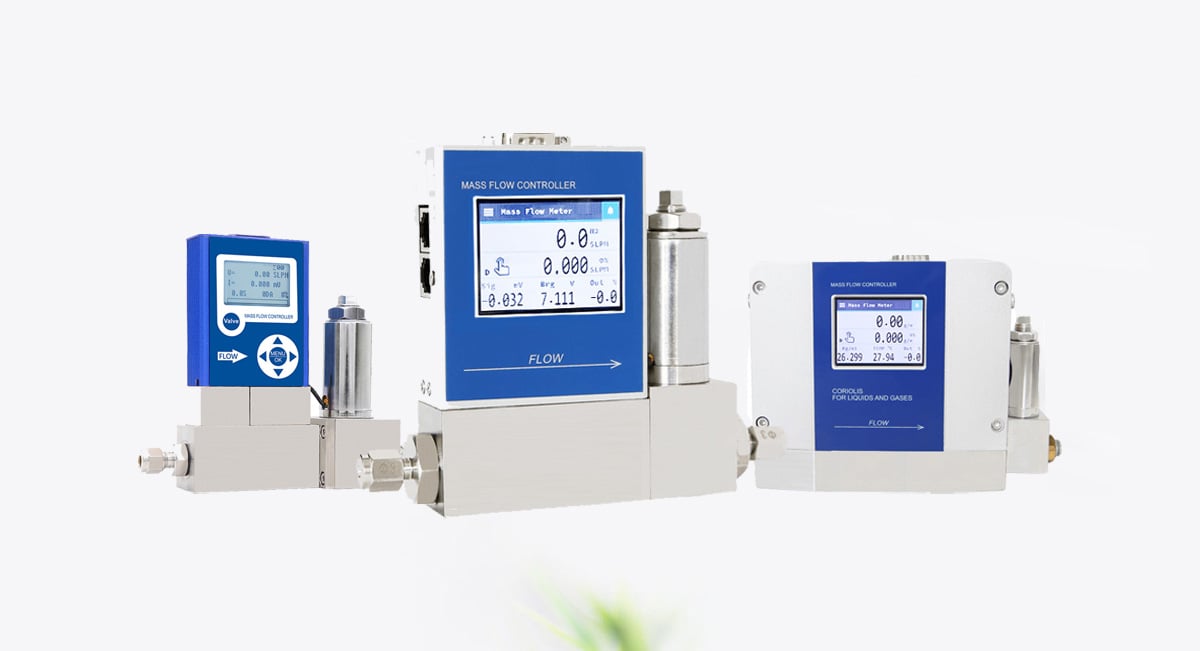
Measuring and regulating gas or liquid flow with precision is fundamental in industries ranging from semiconductors to biotech. Among the most reliable instruments for this task is the Mass Flow Controller (MFC). This guide will walk you through what MFCs are, their major types and operational principles, their applications.
Table of Contents
What Is a Mass Flow Controller?
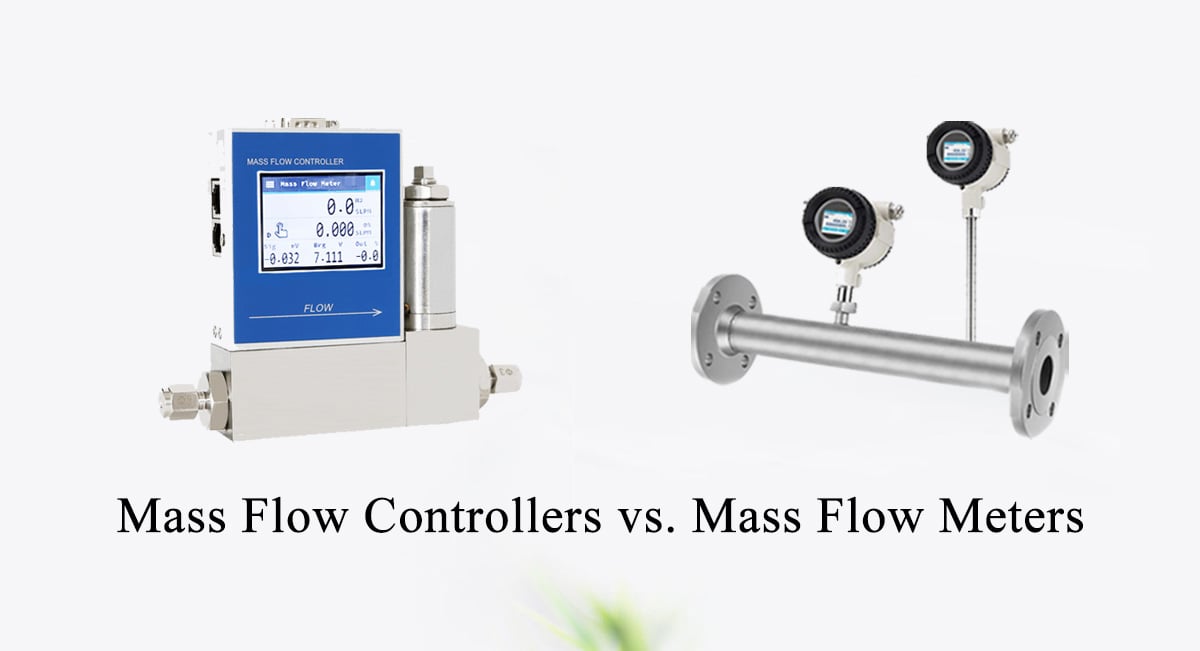
A Mass Flow Controller (MFC) is a fluid control device designed to measure and regulate flow by mass, not just volume. Unlike traditional mass flow meters, MFCs contain an internal valve mechanism and a control loop that maintains flow at a specific setpoint. This makes them ideal for systems that require precise, stable delivery of fluids under varied conditions.
Key characteristics of MFCs:
- Measures and actively controls flow
- Operates with high repeatability and accuracy
- Suitable for very low flow rates, including SCCM (standard cubic centimeters per minute)
- Offers digital and analog communication for automation integration
How Does Mass Flow Controllers Work

The main components of mass flow controllers include a flow sensor, a control valve, and an electronic controller. The flow sensor continuously measures the actual mass flow of the fluid passing through the device, often using thermal or differential pressure principles. This measurement is sent as a signal to the electronic controller, which compares it to a user-set target flow rate.
If the measured flow deviates from the target, the controller automatically adjusts the control valve to increase or decrease the flow, maintaining a stable and accurate output. This feedback loop operates in real time, allowing the MFC to respond quickly to changes in pressure, temperature, or other process conditions.
Types of Mass Flow Controllers
Thermal Mass Flow Controllers
How They Work: Measure the heat transfer away from a heated sensor element; the heat loss relates directly to the mass flow. Here’s a case study of thermal mass flow controller.
Best For: Clean, dry gases at low flow.
Pros:
- Compact, highly sensitive, no moving parts
- Excellent accuracy in low-flow measurements
Cons:
- Sensitive to gas composition and moisture
- Requires recalibration for different gases
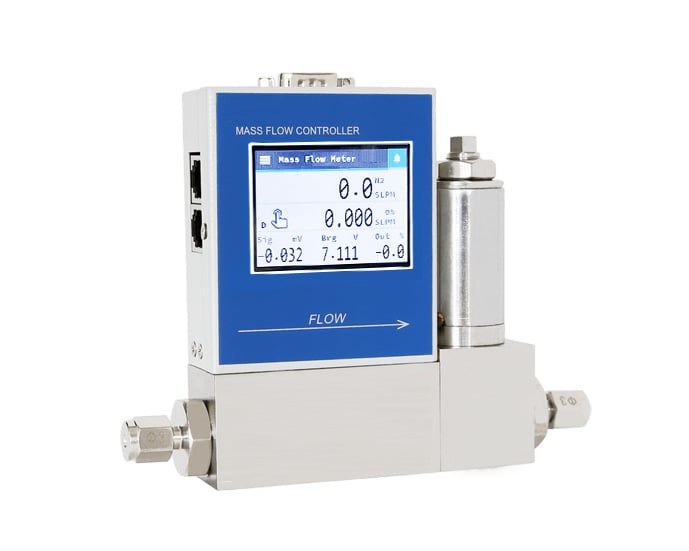
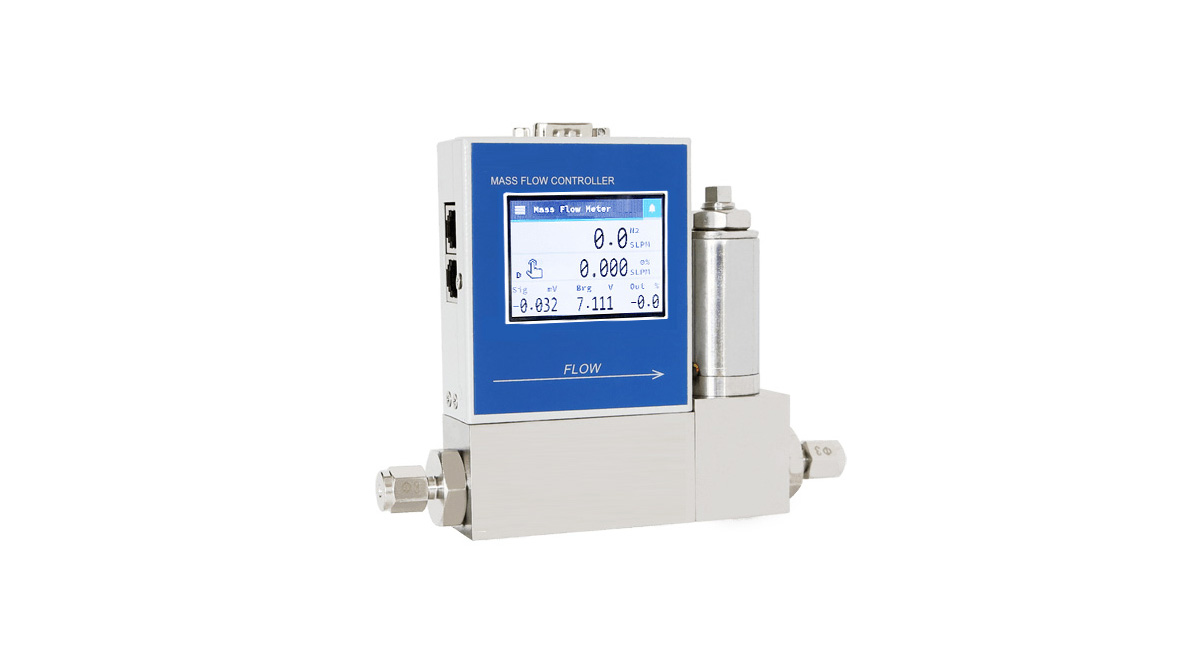
Thermal Gas Mass Flow Controller MTL20FD
- Designed for low flow gas measuring.
- Turn Down Ratio: 50:1 for digital mass flow controller; 100:1 for digital mass flow meter.
- Response Time: mass flow controller<0.2s; mass flow meter <0.1s
- Integrated PID controller to regulate flow rate
- Directly measuring mass flow rate, automatic temperature compensation
- Touchable display screen
- Suitable for various high and low pressure pipelines.
Differential Pressure (DP)-Based Mass Flow Controllers
How They Work: Monitor pressure differences across an internal orifice or laminar flow element; modulate flow with a control valve.
Best For: Gases, steam, and sometimes liquids in applications requiring broader applicability.
Pros:
- More robust across environmental variations
- Suitable for multi-fluid applications
Cons:
- Less accuracy at very low flows

Differential Pressure Mass Flow Controller MTL20FC
- Designed for low flow liquid/gas/steam measuring.
- Turn Down Ratio: 50:1 for digital mass flow controller; 100:1 for digital mass flow meter.
- Response Time: mass flow controller<0.2s; mass flow meter <0.1s
- Integrated PID controller to regulate flow rate
- Directly measuring mass flow rate, automatic temperature compensation
- Touchable display screen
- No preheating required, no response lag during measurement.
Coriolis Mass Flow Controllers
How They Work: Utilize vibrating tubes to measure mass flow directly through the Coriolis effect—a true mass measurement independent of temperature or pressure variations.
Best For: All fluids—including mixtures and viscous liquids.
Pros:
- Exceptional accuracy (±0.1–0.2%)
- Measures mass flow, density, and temperature
- Requires minimal recalibration for composition shifts
Cons:
- Higher cost

Coriolis Mass Flow Controller MTL20FE
- MTL20FE measures a wide range of fluids, such as lubricating oil, liquid nitrogen and other high-density fluids can also be accurately measured.
- High precision, good repeatability. For liquids, the measurement accuracy can reach ± 0.25%; for gases, the measurement accuracy can reach ± 0.5%.
- High reliability and stability, capable of withstanding extreme environmental conditions
Applications of Mass Flow Controllers
Semiconductor and Electronics
Precise gas control is vital in deposition and etching processes (e.g., CVD, PVD).
Laboratories and Research
Essential for exact gas delivery in chemical, physical, or biological experiments.
Biotech and Medical
Used in cell culture control, respiratory gas management, and dosing in medical devices.
Energy & Environmental Monitoring
Crucial for hydrogen fuel cell testing, emissions control, and biogas flow regulation.
Industrial Processing
Integral in welding, metal treatments, and chemical mixing where tight control of gas flow is mandatory.
Mass Flow Controllers remain essential tools across critical industries requiring precise fluid delivery. From thermal MFCs suited for cost-effective gas control, to Coriolis controllers offering top-tier accuracy across all media, and DP MFCs for industrial resilience—each technology brings unique benefits.
If your operation demands compact, ultra-low flow control with fast stabilization, Metlan Instruments’ MFCs are a compelling solution—offering multi-principle versatility, excellent accuracy, and modular designs that seamlessly integrate into high-precision applications.
Here’re some more posts about Mass Flow Controller: